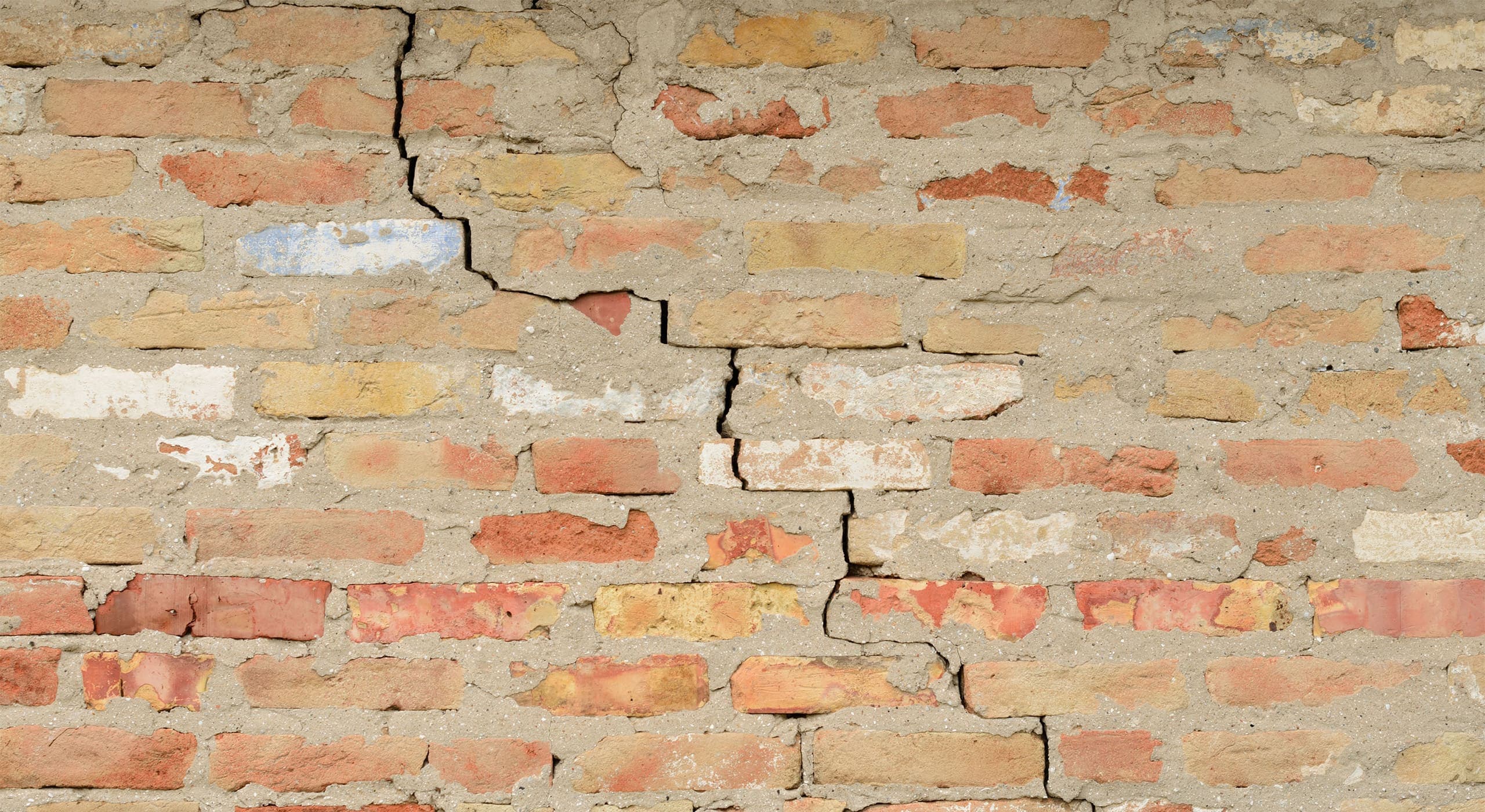
Subsidence is when the ground beneath a building sinks, pulling the property’s foundations down with it. Subsidence usually occurs when the ground loses moisture and shrinks due to prolonged dry spells, or the presence of trees and shrubs which cause the soil to lose moisture.
What causes it?
Subsidence can be caused by a variety of factors including:
- SOIL TYPE: Clay soils in particular are vulnerable because they shrink, crack and shift during hot, dry weather depending on their water content.
- TREES AND SHRUBS: Where clay soils are present, vegetation can be an issue if they are close to your foundations as some species absorb a lot more water, and so can dry the soil out.
- LOCAL MINING ACTIVITY: Old mines and former quarry or pit sites can cause instability if the fill-in material collapses.
- LEAKING DRAINS AND WATERWAYS: These can wash away or soften soil. Sandy, gravely soils are the most vulnerable to washing away.

How to spot it?
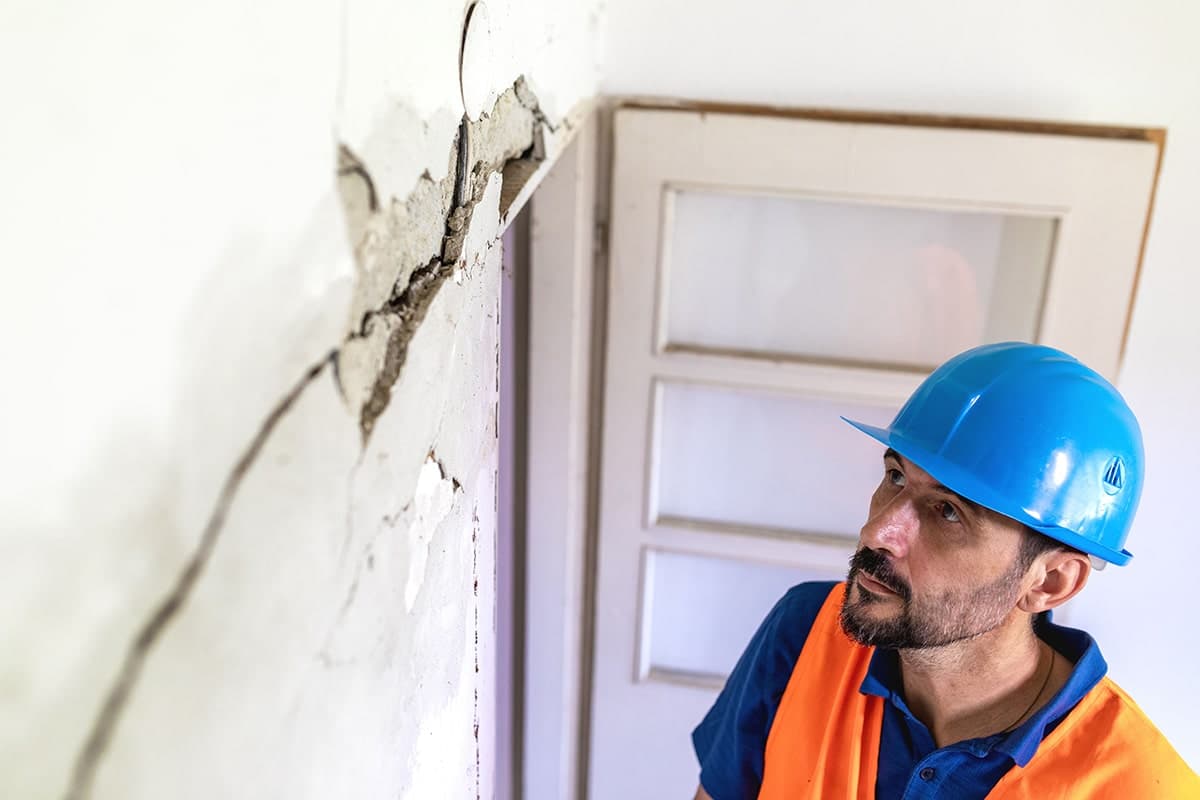
The first sign of subsidence is usually the appearance of cracks in your home’s walls, either in the internal plasterwork or external brickwork. Subsidence cracks are quite distinctive from other cracks. They usually appear suddenly, especially after long periods of dry weather, and tend to be:
- Diagonal, and wider at the top than at the bottom.
- Thicker than a 10 pence coin.
- Found around doors and windows.
Other signs of subsidence include doors and windows sticking for no obvious reason, and wallpaper ripping or crinkling that is not caused by damp. However, if a crack appears it does not necessarily mean subsidence. Many properties experience cracking from time to time, but only rarely is this caused by subsidence. Most common causes for cracks could include:
- Buildings naturally shrink and swell in response to changes in temperature and humidity, this can lead to minor cracks where walls and ceilings meet.
- New homes and recently build extensions often experience cracking as the structures settle under their own weight.
- Fine cracks are also common in freshly plastered walls as they dry out.
Cracks arising from these causes are usually uniform in width, narrow (hairline to 3mm) and can be dealt with during routine maintenance or redecoration.

How to prepare / prevent it?
While not all subsidence problems can be avoided, a few simple actions can be taken to protect your property and prevent long-term problems if you live in a clay soil area:
- Trees or large shrubs close to the house, garage or outbuildings can cause soils to dry out significantly, so these may need to be managed. We would recommend that you seek professional advice from a tree specialist before undertaking any work.
- Ensure that gutters, pipes, and plumbing are well maintained to avoid leaks.